Hidden water damage in a Miami home may show up as swollen trim, recurring stains, flooring movement, cabinet distortion, musty odor, unusual humidity, or a cool surface pattern. Treat each as a clue—not proof. Confirm the source and affected boundary with history, visual inspection, material-specific moisture readings, and selective access when the assembly cannot be tested reliably.
Hidden water damage rarely announces itself with a dramatic puddle. It may begin as a paint bubble, a cabinet door that no longer closes, a cool patch on the wall, or a musty odor that returns when the AC cycles. In Miami humidity, those clues deserve attention before cosmetic repair hides them.
No single sign proves a leak. Temperature, sunlight, plumbing, condensation, and construction can create similar patterns. A useful investigation combines the water history, visual inspection, direct moisture readings, and source testing by the appropriate trade.
Changes in paint, drywall, and trim
Peeling paint, loosened wallpaper, swollen baseboards, soft drywall, rusting corner bead, and recurring ceiling rings can all result from moisture inside an assembly. A fresh coat of paint may temporarily hide the stain while the source continues.
Pay attention to a line rather than a spot. Swelling at several baseboards may trace water beneath flooring. A ceiling stain that expands after wind from one direction may point to an exterior opening. Mark the edge lightly and photograph changes after weather or fixture use.
Flooring movement and cabinet distortion
Wood flooring can cup, crown, gap, or darken as moisture changes across its thickness. Floating floors may lift at seams or feel soft over wet underlayment. Tile often remains visually stable while moisture affects grout, wall plates, cabinets, or material installed above the slab.
Composite cabinet bases and toe-kicks swell quickly. Doors rub, veneers release, and the bottom shelf may feel raised. Water can stay trapped behind a finished cabinet back where ordinary fans cannot reach it.
Odor, humidity, and condensation clues
A persistent musty odor can indicate damp porous material, settled contamination, or a drain or HVAC problem. Odor that strengthens when the AC starts may involve a return pathway or condensate area, but it does not identify the exact source by itself.
High relative humidity and condensation on vents or windows can result from an AC issue, open building envelope, or a large moisture load. A dehumidifier may improve comfort without fixing the wet wall, so symptom relief should not replace source diagnosis.
- Musty odor that returns after cleaning
- A room that feels warmer, cooler, or more humid than adjoining space
- Repeated condensation around one vent or wall
- Unexpected increase in water use or AC drain activity
- New pest activity near a damp assembly
What thermal imaging can and cannot show
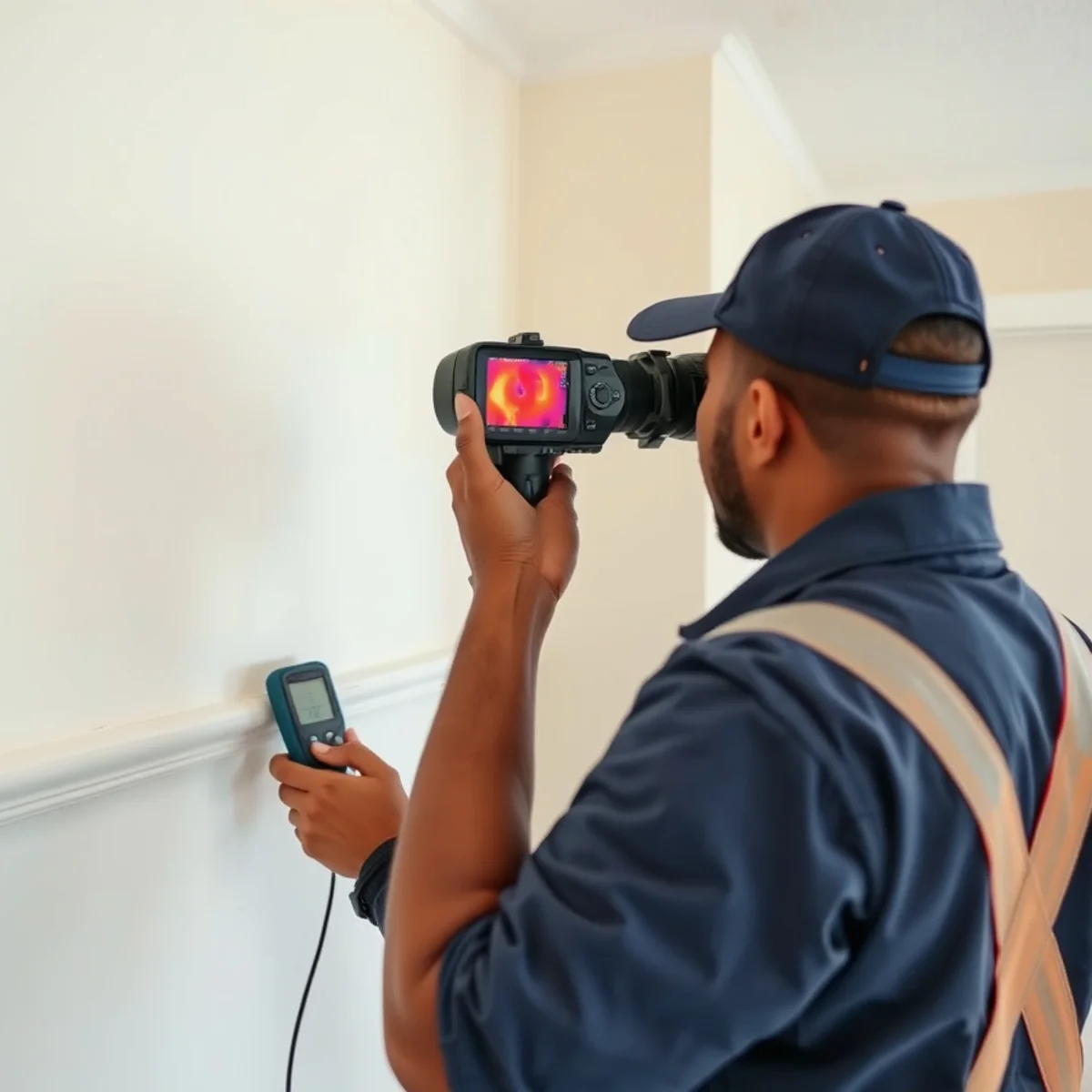
Thermal cameras display surface temperature differences, not water. Evaporation can cool a wet area, while sunlight, insulation gaps, air leaks, and plumbing temperature create similar patterns. A colorful image is a hypothesis, not proof.
A technician confirms suspicious patterns with a moisture meter and construction knowledge. Pin and pinless meters have different uses and limitations. Invasive testing or selective access may be necessary when finishes block a reliable reading.
Common concealed sources in Miami
AC condensate lines and pans operate year-round. Flat-roof drains and parapets face heavy rain. Slab and supply lines can leak below finished floors. Condo fan coils, shared stacks, and units above add vertical sources. Sliding doors and stucco openings admit wind-driven rain.
Match inspection to the clue. A stain after rain calls for envelope evaluation; a warm floor or water-meter movement calls for plumbing; a wet AC closet calls for HVAC. Restoration maps the damage and dries the property, while the appropriate specialist corrects the source.
When to open a wall or floor
Selective access is justified when contamination, wet insulation, material failure, or stagnant readings make drying in place unreliable. The opening should target confirmed conditions and preserve photographs, profiles, and finish boundaries for repair.
Do not open suspected mold or sewage cavities without containment planning. Disturbance can spread dust and contamination. When conditions are clean and the material responds, monitored drying may avoid unnecessary demolition.
Expert insight: what the field evidence should prove
A reliable hidden-moisture investigation records conditions, not just a dramatic thermal image. Start with the leak or weather history, room temperature, relative humidity, HVAC operation, recent sunlight, and construction layers. Scan for patterns, then verify suspicious and dry comparison areas with a meter suited to the material; document meter mode, location, depth, and repeat readings at fixed points. Federal building guidance notes that thermography measures surface-temperature differences that may also come from air leakage, insulation gaps, thermal bridges, reflections, or solar loading. When the readings and history disagree, use targeted source testing, a borescope, or carefully controlled access rather than broad demolition. The final conclusion should distinguish active source, residual moisture, dry staining, condensation, and material damage so the source trade and restoration scope solve the same problem.
Frequently asked questions
Can a wall be wet without a stain?
Yes. Paint and finishes may hide moisture, and water can remain at the base or inside insulation before staining appears. Direct readings are needed.
Does a thermal camera find leaks?
It finds temperature patterns that may be associated with moisture. The pattern must be confirmed with moisture readings and source investigation.
Why does a musty smell come and go?
Humidity and HVAC operation can release odor from damp or contaminated materials. The changing odor is a clue, not a diagnosis.
Get a measured next step
If water is active or the structure may still be wet, call the 24/7 line. The free inspection connects the source, affected materials, and safe restoration sequence without relying on surface appearance.
Call (201) 277-9344