Choose a Miami water damage restoration company that can verify its identity, insurance, relevant credentials, assigned supervisor, response capability, contamination controls, moisture-testing method, pricing, authorization limits, and final records. The right contractor explains what it will measure and deliver, separates licensed trade roles, and communicates with an insurer without promising coverage or pressuring you to sign broad documents.
Water damage creates pressure to decide quickly, but speed and diligence can coexist. A qualified company should answer the emergency line, ask useful safety questions, explain its arrival plan, and arrive with equipment appropriate to the loss. It should also document credentials, scope, pricing method, and authorization before work expands.
The best choice is not always the first truck or the lowest verbal quote. Look for a company that can explain how it will find hidden moisture, classify contamination, measure drying progress, protect evidence, communicate with the insurer, and hand the property into repair.
Verify identity, insurance, and relevant credentials
Confirm the legal business identity, physical contact information, general liability and workers' compensation coverage, and licenses required for the work being proposed. Mold assessment, mold remediation, plumbing, roofing, electrical, and reconstruction can involve different licensing responsibilities in Florida.
IICRC training is a useful restoration signal, but ask which technicians or supervisors hold relevant certifications and who will lead the job. Never use a competitor's license number or accept a badge without a verifiable company relationship.
Ask how the wet boundary will be proven
A technician should use direct moisture readings and construction knowledge, with thermal imaging as a screening tool rather than proof. Ask whether adjoining rooms, cabinets, lower floors, and connected units will be checked. The visible stain is not the full scope.
Request an initial moisture map and final readings. Drying equipment should be monitored and adjusted. A company that drops machines for a fixed number of days without measurements cannot show that the structure reached a goal.
Evaluate contamination and material decisions
The company should identify whether water is clean, gray, sewage, or exterior floodwater and explain how that affects containment, protective equipment, cleaning, and porous materials. Fast demolition without a contamination or moisture explanation is a warning sign.
The opposite is also risky: promising to save every carpet, cabinet, or drywall assembly regardless of sewage or prolonged saturation. Good restoration balances salvage with health, material stability, access, and measurable response.
Review response capability and Miami logistics
Ask about actual dispatch coverage, after-hours supervision, power, high-rise equipment, parking, elevators, security, and post-storm access. A response-time promise should be operationally realistic and subject to traffic, weather, and building access.
For condos and commercial properties, the company should understand certificates of insurance, common-area protection, unit access, tenant communication, and room-by-room documentation. Miami work often fails at the loading dock before it fails at drying science.
Understand insurance assistance without surrendering judgment
A restoration company can photograph damage, create moisture logs, write an itemized scope, meet the adjuster, and communicate progress. It cannot guarantee coverage or the size of a settlement. Be cautious when a salesperson presents legal or insurance conclusions as certainty.
You generally retain contractor choice. Preferred-vendor relationships can be useful, but ask who the contractor works for, how disagreements are handled, and whether program participation affects materials or scope. Keep copies of every report sent to the carrier.
Read the work authorization and pricing method
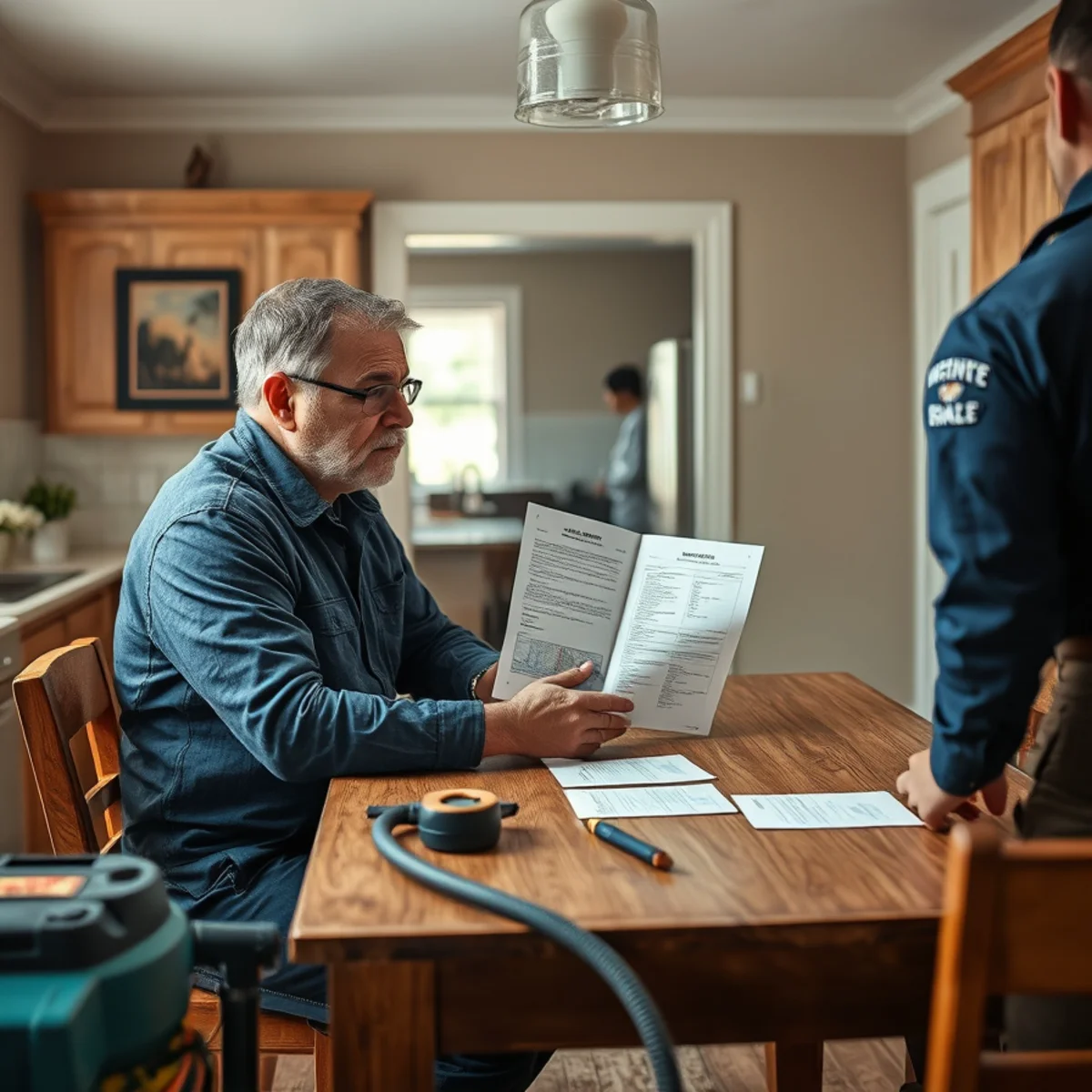
Emergency work may begin before every concealed condition is known, but the authorization should still identify rates or pricing method, cancellation, payment responsibility, deductible handling, equipment charges, and who can approve added work. Do not sign a blank scope.
Understand any assignment, direction-to-pay, finance, lien, or arbitration language and seek advice if needed. A free inspection is not a reason to skip the contract. The company should welcome informed questions and provide a copy before crews leave.
- Who is the legal contracting company?
- Who supervises the loss, and what training applies?
- How are wet areas and final drying documented?
- What is the pricing method and emergency authorization limit?
- Who performs plumbing, roofing, mold, electrical, and reconstruction trades?
- What records will the owner receive?
Look for an accountable repair handoff
Mitigation should end with final readings, photographs of removed materials, a cleaning record, and a repair recommendation. Reconstruction should begin from that evidence, not a new guess. If the same company performs both, ask for separate mitigation and repair scopes.
A strong contractor makes the project easier to understand under stress: one contact, visible records, honest limits, and clear next decisions. That combination protects the property better than a wall of unverified badges or a vague promise to “handle insurance.”
Expert insight: what the field evidence should prove
Verify the business behind the truck, not just the badge in an advertisement. Match the legal name on the work authorization, certificate of insurance, invoice, and state or local license record; where Florida construction licensing applies, DBPR advises checking both the business and its qualifying individual. Ask for a sample moisture log and completion package before authorizing work. Read direct-payment, lien, finance, arbitration, power-of-attorney, cancellation, and change-order language separately from the emergency scope. Florida DFS currently states that post-loss assignments of property-insurance benefits are prohibited for policies issued or renewed on or after January 1, 2023, but other contract clauses still deserve review. The owner should report the claim directly, keep every document, and use legal or insurance advice for rights and coverage questions.
Frequently asked questions
Is IICRC certification required for every technician?
Requirements and roles vary, but ask which certifications the company and the assigned lead hold. Relevant training and documented procedures are useful indicators.
Should I choose the insurer's preferred vendor?
It can be a convenient option, but owners should compare credentials, scope, contract, documentation, and program terms. Ask whether declining changes any policy obligation.
What is the biggest red flag?
Pressure to sign broad or blank documents without an explained scope, pricing method, identity, and cancellation terms. Urgency does not eliminate informed authorization.
Get a measured next step
If water is active or the structure may still be wet, call the 24/7 line. The free inspection connects the source, affected materials, and safe restoration sequence without relying on surface appearance.
Call (201) 277-9344