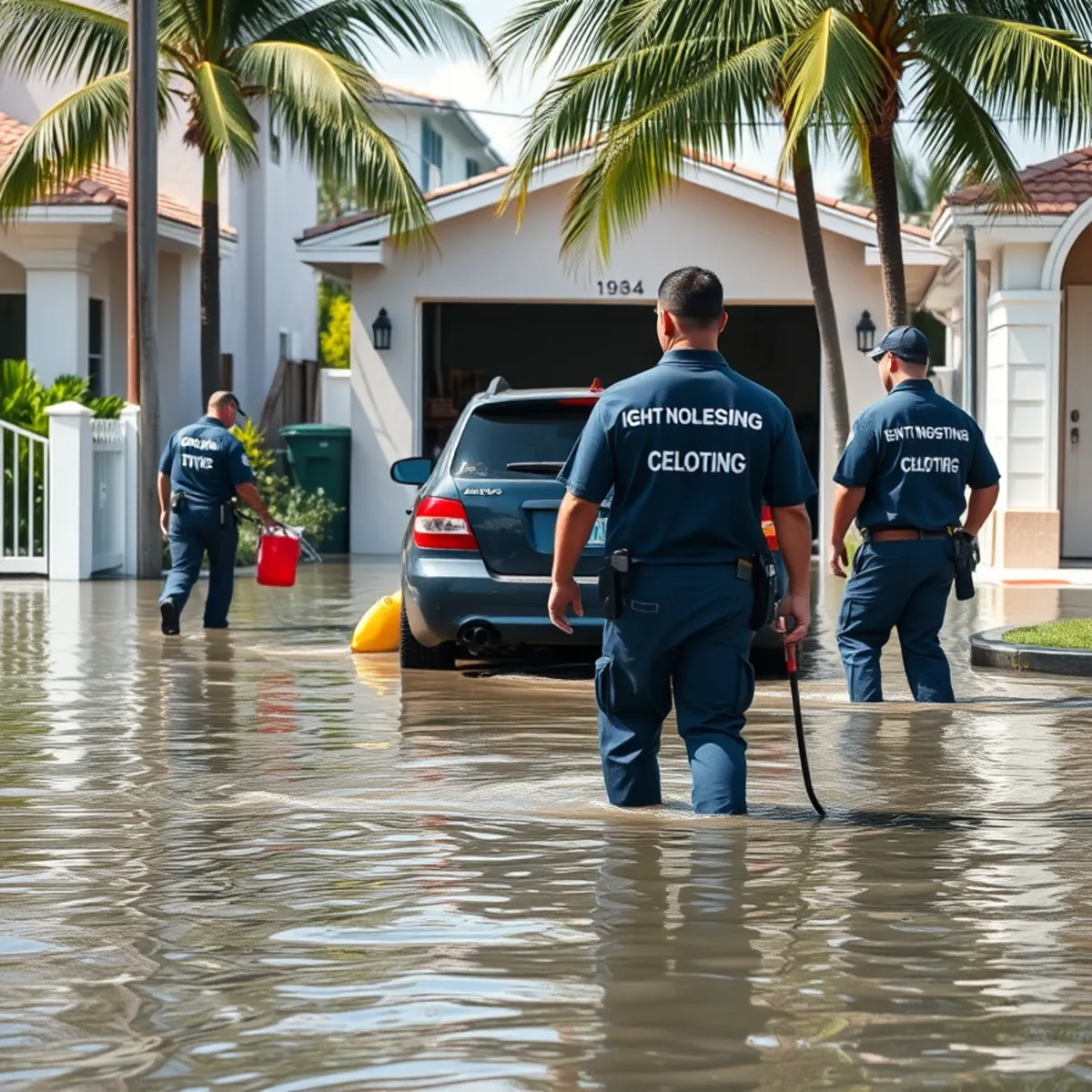
King-tide flooding can reach low-lying Miami streets, garages, drains, and ground floors even without rain. Before the predicted peak, move vehicles and contents higher, test pumps, protect openings without blocking drainage, and photograph the dry property. Avoid contact with floodwater; after it recedes, remove contamination and salt residue before measured structural drying begins.
King tides are the highest predictable tides of the year. In low-lying parts of Miami-Dade, they can push salt or brackish water through streets, drains, seawalls, garages, and ground-floor openings even when the local sky is clear. Rain and onshore wind can make the flooding deeper or longer.
The water may recede in hours, but salt does not leave with it. Salt residue attracts moisture and accelerates corrosion on wiring, connectors, vehicles, elevators, appliances, fasteners, and reinforcement. Cleanup must address the water path and the residue, not simply wait for the slab to look dry.
Know how tidal water reaches the building
Common entry points include garage ramps, floor drains, seawall gaps, low doors, utility penetrations, and cracks where groundwater rises through porous soil and limestone. Water can also back up through drainage systems that normally carry rain away from the property.
Walk the exterior during ordinary dry weather and map the lowest openings. Note where street water collects and whether drains have backflow controls. A civil engineer, flood professional, plumber, or building manager can evaluate permanent measures; temporary barriers should never block an evacuation route or redirect water into a neighboring property.
Saltwater is not a clean-water loss
Tidal water has contacted streets, soil, storm drains, fuel, waste, and marine material. Porous finishes exposed at ground level are evaluated like contaminated flood materials. Carpet, pad, gypsum, and insulation may not be reliable candidates for ordinary drying in place.
Metal and electrical systems need special attention. A component may operate immediately after drying while corrosion continues inside. Electricians, elevator contractors, HVAC technicians, and automotive professionals should evaluate their systems. A restoration crew cleans and dries the building but does not certify specialized equipment for safe service.
Prepare before the predicted tide window
Move vehicles, chemicals, stored contents, and portable equipment above the expected water line. Test garage and drainage pumps, check backup power safely, and confirm that discharge points will remain usable. Condominium boards should identify who monitors garages, elevators, electrical rooms, and access controls.
Photograph the dry condition and contents before water arrives. Keep flood policy information, vendor contacts, and shutoff locations available off site. Residents should follow local flood advisories and avoid driving through tidal water, which can hide holes, salt-damage vehicles, and move unexpectedly.
- Raise or relocate contents from garage and ground-floor storage.
- Confirm pumps, backflow devices, alarms, and safe backup power.
- Protect elevators and building systems through qualified contractors.
- Record pre-event conditions and follow official tide and road alerts.
Document the water line before cleanup
When entry is safe, photograph exterior depth markers, garage columns, wall water lines, drain backups, and every affected area. Include equipment model numbers and metal components exposed. The pattern can help explain that water rose from outside rather than coming from an interior line.
Do not energize wet systems. Restrict pedestrian and vehicle access so contaminated water is not tracked into clean elevators or residences. Extract accessible water, remove debris, and establish clean and dirty zones before material disturbance begins.
Clean first, then dry and evaluate corrosion
Visible soil and salt residue should be removed from cleanable structural surfaces using methods appropriate to the material. Disinfection follows physical cleaning where required. Porous material decisions are made conservatively, and waste follows a controlled route out of the building.
After cleaning, dehumidification and air movement dry retained assemblies to measured goals. Metal, electrical, elevator, fire, and mechanical components receive their own specialist inspections. The final record should distinguish building drying from equipment certification and permanent flood-resilience work.
Long-term protection is property-specific
Possible measures include deployable barriers, flood-resistant doors, raised storage, backflow devices, improved pumps, alarms, elevated equipment, and material changes below the design flood level. Each can shift water or create maintenance needs, so qualified design and permitting guidance matters.
Keep a tide-event log with dates, depth, entry points, pump performance, and damage. Repeated evidence helps owners, associations, and engineers prioritize improvements instead of treating every event as a surprise cleanup.
Expert insight: what the field evidence should prove
Treat each tidal event as both a cleanup and a diagnostic opportunity. Record the official forecast window, actual arrival and recession times, exterior depth, interior high-water line, entry points, drain behavior, pump runtime, power interruptions, wind, and rainfall. The City of Miami notes that flooding can appear before and after the peak, while Miami-Dade warns that rain, wind, and waves can worsen predicted tides. Those variables explain why one event crosses a threshold and another does not. After safe access, map salt residue and moisture separately: a dry-looking slab does not establish that wall bases, elevator pits, wiring, anchors, or stored contents are clean or serviceable. Restoration records the building condition; qualified electrical, elevator, mechanical, engineering, and flood-design professionals evaluate their systems and permanent controls.
Frequently asked questions
Is king tide water covered by homeowner insurance?
Rising tidal water is commonly associated with flood coverage, but policies vary. Ask the carrier or licensed insurance professional and document the exterior water line and entry path.
Can I hose saltwater residue into a drain?
Do not assume the drain route or discharge is permitted or safe. Cleanup should control contaminated water and residue according to the property, drainage system, and local requirements.
Why does a garage still feel damp after the tide recedes?
Salt is hygroscopic and can attract moisture. Wall bases, coatings, storage, and enclosed systems may also remain wet after the slab surface looks dry.
Get a measured next step
If water is active or the structure may still be wet, call the 24/7 line. The free inspection connects the source, affected materials, and safe restoration sequence without relying on surface appearance.
Call (201) 277-9344