What a complete storm & hurricane response includes.
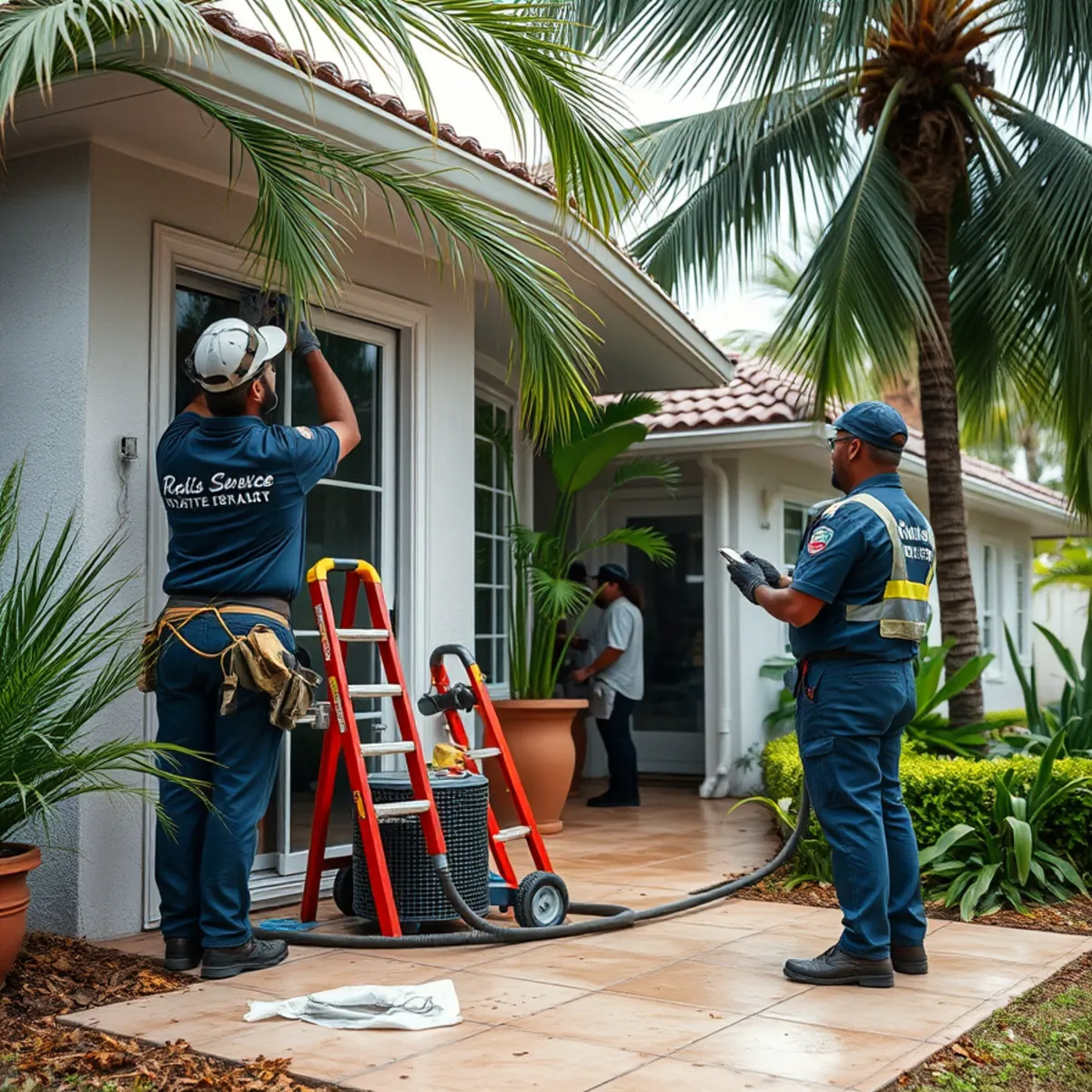
Hurricane damage restoration in Miami begins only when access is safe: document conditions, secure reachable openings, remove interior water, separate contaminated or saltwater materials, protect contents, and establish measured drying. Restoration247 connects temporary board-up and tarping to the interior mitigation and permanent repair scope instead of treating emergency covering as the finished restoration.
Hurricane losses rarely involve one trade. Wind opens the roof or windows, rain travels through several floors, power fails, contents shift, and exterior water may bring contamination or salt. The first plan must stabilize the envelope and address water at the same time.
We coordinate emergency board-up and tarping with interior extraction, contents protection, moisture mapping, sanitation, and structural drying. As access improves, the scope expands into selective removal and reconstruction. Owners receive one organized view of what was temporary protection, what was mitigation, and what remains for permanent repair.
What is included in storm & hurricane service
- Post-storm safety and access assessment covering unstable materials, standing water, electricity, debris, wind, and crew routes
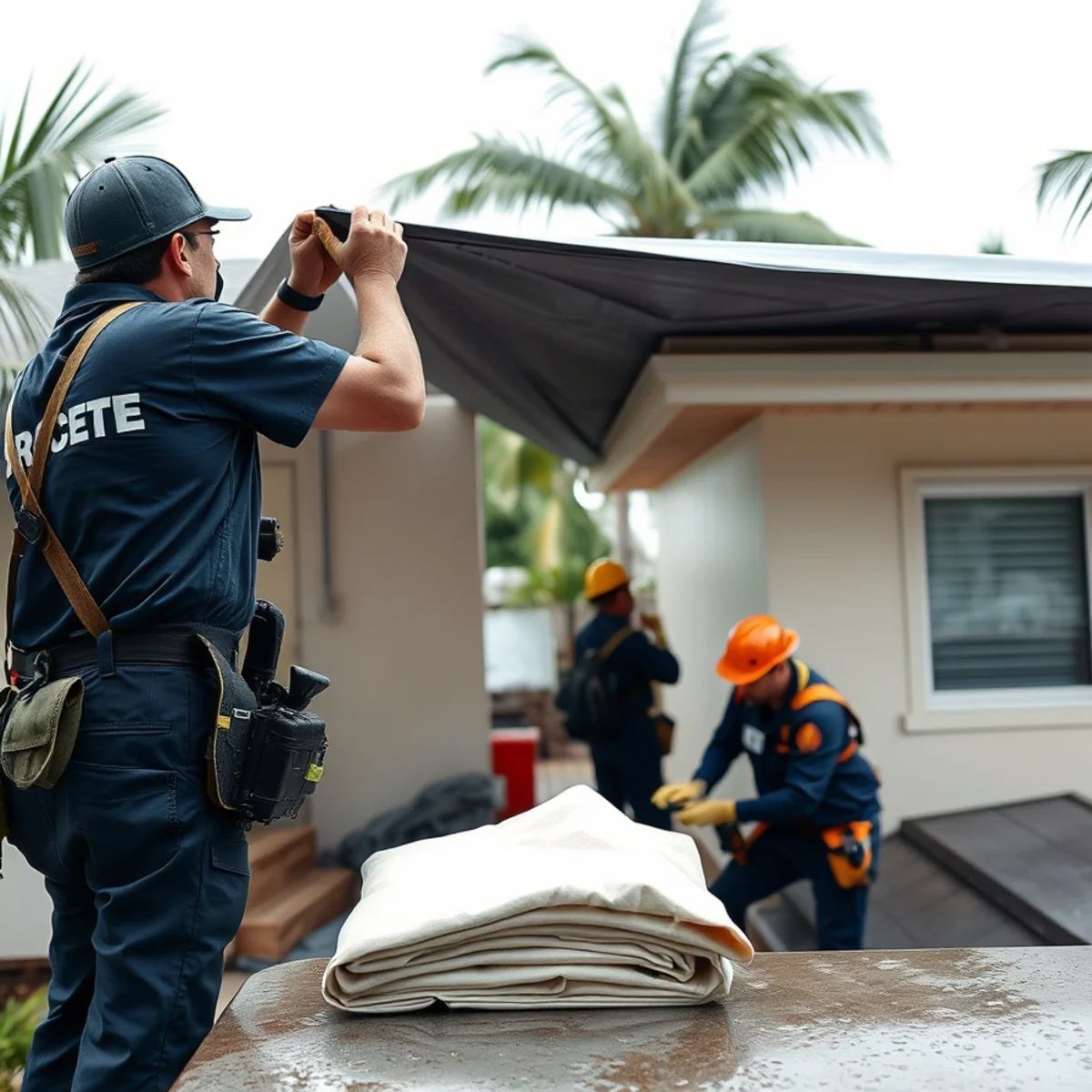
- Weather-dependent board-up or temporary roof protection for reachable openings, documented as stabilization rather than permanent repair
- Interior extraction, water-category evaluation, salt and debris cleaning, contents protection, and moisture mapping across affected levels
- A controlled drying and monitoring plan adapted to power, elevator, generator, security, and multi-unit building constraints
- Before-and-after photographs plus separate records for temporary protection, mitigation, specialist evaluations, and permanent reconstruction
Signs and problems that need professional attention
- Missing roof sections, broken glazing, or openings allowing rain inside
- Wind-driven water stains across ceilings, exterior walls, and windows
- Storm surge, saltwater, or contaminated street water in occupied areas
- Power outage preventing normal pumps, elevators, or HVAC operation
- Multiple units, roofs, garages, or common areas affected at once
Tarping stops new rain; it does not dry the building
A temporary cover reduces ongoing intrusion but moisture already inside will continue migrating. Ceiling cavities, insulation, exterior walls, floor systems, and cabinets must still be mapped and dried. In a multi-story building, the visible ceiling stain may be several levels away from the original opening.
Temporary protection is weather-dependent and should never put crews on an unsafe roof. After a major storm, access, wind, lightning, debris, and structural damage may limit what can be completed immediately. We document those conditions and prioritize the actions that can reduce loss without creating a second emergency.
One file for wind, water, and repair evidence
Hurricane claims can involve wind, flood, building association, owner, and business-interruption questions. Keep photographs from before temporary work, the date and time of discovery, weather entry points, water lines, damaged contents, and every invoice. Do not discard roof components or finishes before they are documented when safe storage is possible.
Our restoration record focuses on the physical loss: source observations, emergency protection, water category, affected areas, equipment, monitoring, and repair needs. Coverage and causation decisions remain with the relevant professionals and policies.