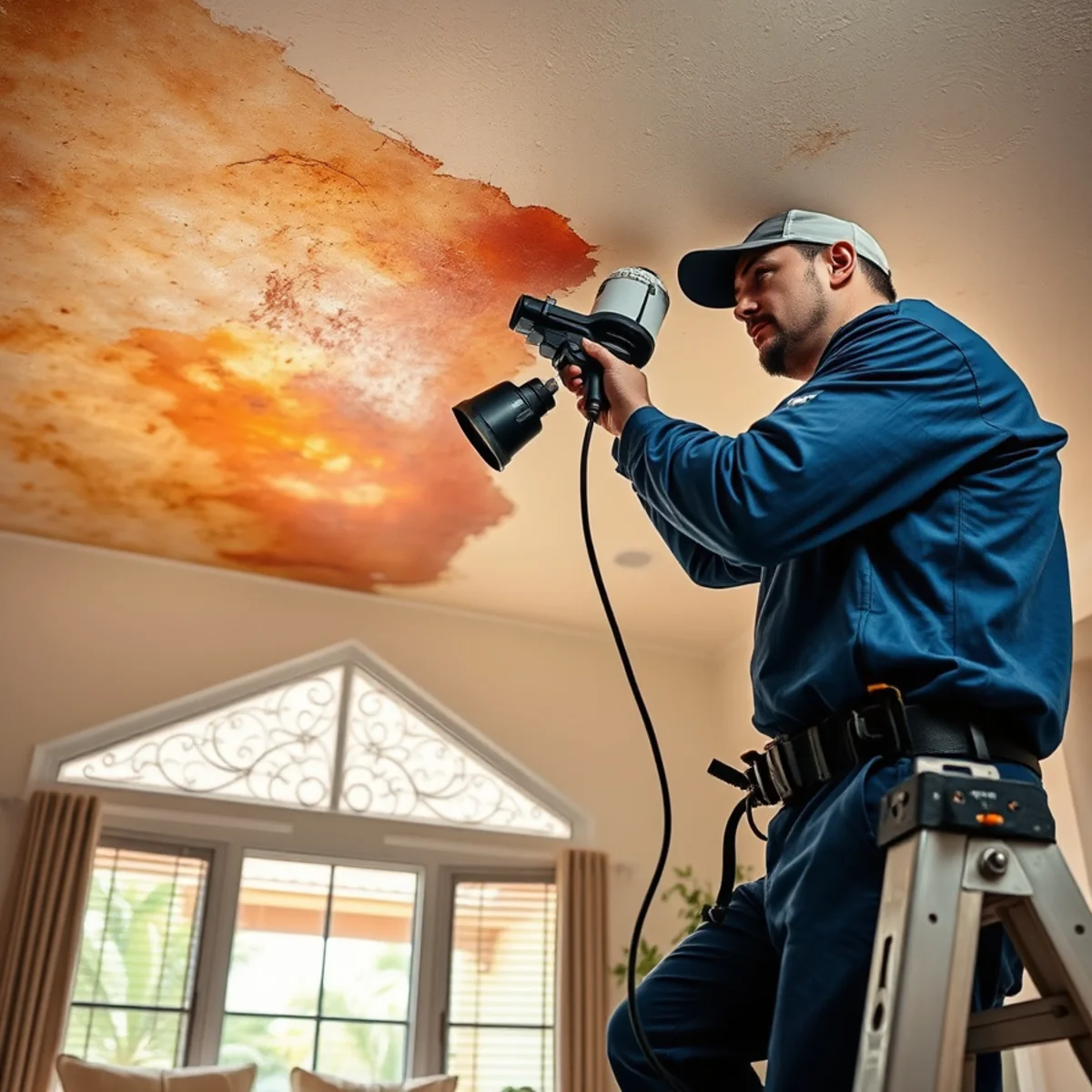
What a complete roof leak damage response includes.
Roof leak water damage restoration in Miami combines safe temporary weather protection with interior moisture mapping, contents protection, wet-insulation and ceiling decisions, controlled drying, and finish repair only after a qualified roofer corrects the source. Restoration247 follows water beyond the visible stain so a cosmetic ceiling patch does not conceal a damp wall, deck, or cavity.
A roof leak rarely falls straight down. Water can travel along decking, trusses, fasteners, conduits, and the top of drywall before it appears as a stain. By the time a ceiling mark is visible, insulation and wall cavities may already be wet several feet from the opening.
We coordinate temporary protection where roof access is safe, then map the interior path, protect contents, extract accessible water, and dry the affected assemblies. Permanent roof repair and interior restoration are planned as distinct steps so a cosmetic ceiling patch is not installed beneath an active leak.
What is included in roof leak damage service
- Occupied-area safety controls for sagging ceilings, wet fixtures, contents, slip hazards, and controlled water catchment
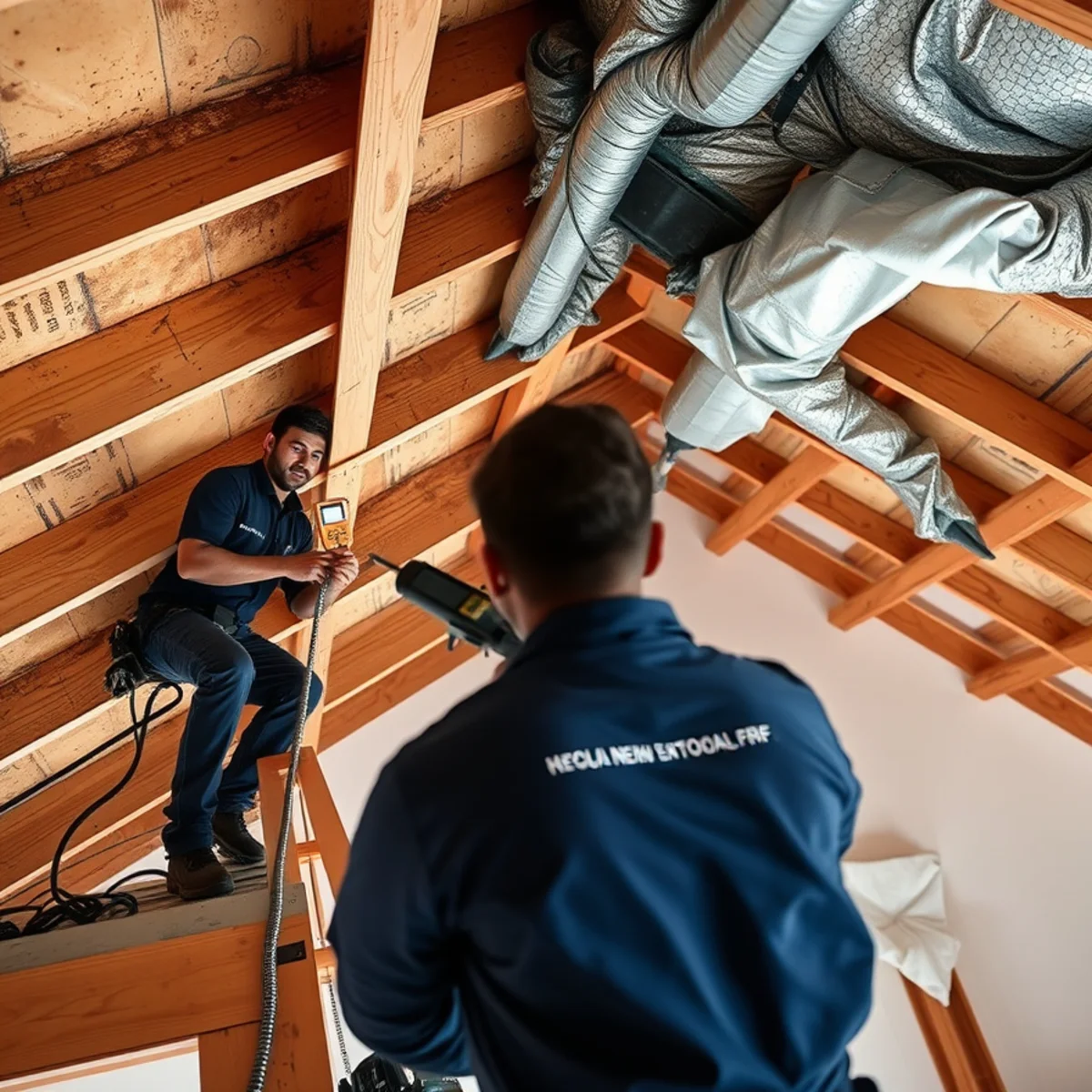
- Roof-to-room migration mapping across attic or plenum space, insulation, ceiling, wall tops, flooring, and adjoining rooms
- Weather- and access-dependent temporary tarping or board-up coordination, photographed separately from the permanent roof repair
- Controlled removal of unsafe or unsalvageable finishes and insulation, followed by monitored drying of retainable assemblies
- Final moisture documentation and an interior repair scope scheduled only after the licensed roofing professional confirms source correction
Signs and problems that need professional attention
- New or expanding ceiling stain after rain
- Bubbling paint, sagging drywall, or water at a light fixture
- Musty attic or room odor that worsens after storms
- Wet insulation, roof decking, wall tops, or exterior-wall finishes
- Repeated leaks around penetrations, parapets, drains, or rooftop equipment
Ceiling water can be an electrical hazard
Water near recessed lights, fans, outlets, smoke alarms, or energized ceiling systems should be treated cautiously. Do not touch a wet fixture or stand beneath bulging drywall. If power can be disconnected from a dry, safe location, use the correct circuit; otherwise keep clear and call qualified help.
A sagging ceiling can release insulation and a large volume of trapped water without warning. Controlled drainage and removal protect occupants and give the drying system access. Poking a hole from below without assessing electricity and material stability can make the event more dangerous.
Miami roof details that commonly leak
Flat and low-slope roofs depend on clear drains, sound membranes, parapet details, and well-sealed penetrations. Tile roofs can shed visible pieces while the underlayment below provides the true water barrier. Rooftop AC curbs and condensate systems add another possible source that can resemble rain intrusion.
The restoration record notes when staining appeared, the recent weather, interior moisture patterns, and temporary work. A licensed roofing professional determines and corrects the roof defect. Interior finishes should remain open as needed until both the source and drying goal are confirmed.