Mold can grow when Miami building materials remain wet, so stop the source and dry water-damaged areas and contents as quickly as safety allows—ideally within 24 to 48 hours. If mold is visible or smelled, correct the moisture problem, assess the affected boundary, protect occupants and workers, remove or clean material appropriately, and verify the space before rebuilding.
Mold spores are normal in indoor and outdoor air. Growth begins when a surface stays wet long enough and provides a suitable food source. Miami heat and humidity make that window a practical concern after roof leaks, AC overflows, plumbing failures, and storms.
The response should focus on moisture and material, not panic. A stain does not identify the full boundary, and a test result does not repair a leak. Find the source, measure the affected assembly, dry what can be retained, remove material that cannot be cleaned, and protect the rest of the building during disturbance.
The 24-to-48-hour rule is a warning, not a stopwatch
Guidance often says mold may begin within 24 to 48 hours. Actual growth depends on temperature, material, moisture, airflow, and the existing microbial load. A wall does not become safe at hour 23 and contaminated at hour 24. The point is that delay narrows salvage options.
Start extraction and dehumidification as soon as the loss is safe. If the property was wet longer than reported or the leak was hidden, assume visible time is not the whole story. Moisture behind cabinets, baseboards, wallpaper, insulation, and floating floors may persist after the exposed surface dries.
Warning signs beyond visible spots
A musty odor that returns when the AC cycles or humidity rises can indicate damp material or settled residue. Paint bubbling, wallpaper releasing, baseboards swelling, grout darkening, condensation, and a room that feels unusually humid are reasons to inspect. None proves mold by itself, but together with a water history they guide the search.
Occupant symptoms are not a reliable mold-location test. Many conditions can irritate eyes, skin, or airways. Anyone with health concerns should speak with a medical professional. Restoration work should be based on the building condition, while healthcare questions stay with qualified providers.
- Musty or earthy odor that persists after cleaning
- Recurring wall or ceiling staining after rain or AC use
- Swollen trim, soft drywall, or peeling finishes
- Visible spotting behind furniture, cabinets, or baseboards
- High indoor humidity or repeated condensation
Why bleach and paint do not solve the source
Bleach is not a complete remediation method for porous drywall, wood, insulation, or cabinet materials. It may discolor the surface while moisture and embedded growth remain. Mixing bleach with ammonia or other cleaners can also release dangerous gas.
Painting over a stained or contaminated surface traps the evidence and can fail quickly when humidity returns. Coatings belong on clean, dry, appropriate substrates after the source has been corrected and any required remediation is complete.
Containment prevents cleanup from becoming distribution
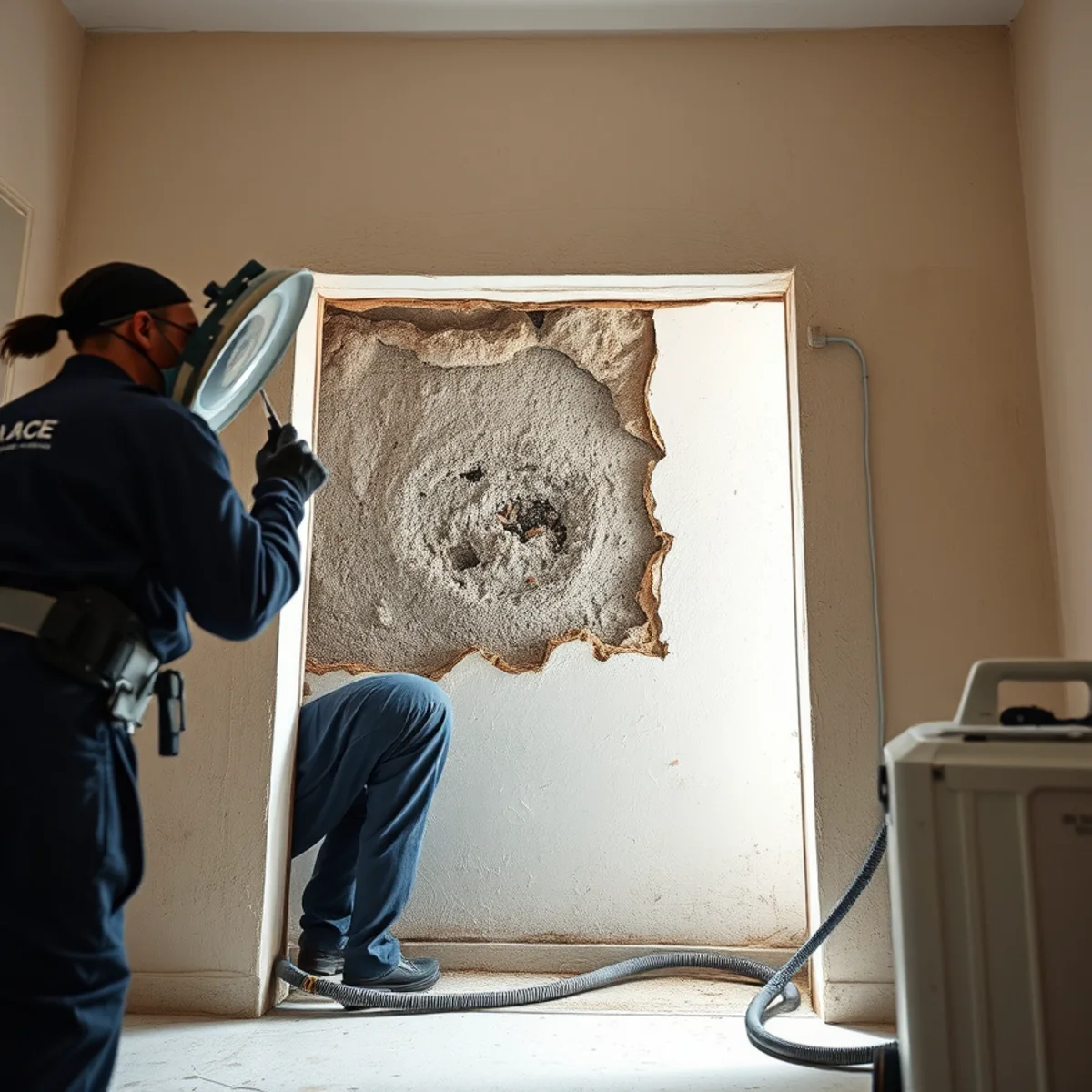
Cutting or sanding affected material can release dust and spores into hallways, HVAC returns, and clean rooms. Larger work areas use barriers, controlled access, and HEPA-filtered negative air to keep particles moving toward the work zone rather than out of it.
The removal route matters. Debris should be bagged or wrapped before it crosses unaffected space. Tools and protective equipment stay controlled. Retained framing and other cleanable surfaces are HEPA vacuumed and detail-cleaned after unsalvageable porous material is removed.
When assessment or testing is useful
Florida regulates mold assessment and remediation. Larger, concealed, disputed, or health-sensitive projects may call for an independent licensed assessor to define the work or perform post-remediation verification. Keeping assessment and remediation roles clear supports an independent check.
Testing is not always the first action for a small visible area with an obvious source. Air samples can vary by time and conditions and do not replace a moisture inspection. The decision should answer a specific question: where the boundary is, what protocol applies, or whether the cleaned area meets the agreed criteria.
Preventing recurrence in Miami
Maintain indoor humidity, keep AC condensate drains and pans serviced, repair roof and plumbing leaks promptly, and avoid pushing furniture tightly against chronically damp exterior walls. Water alarms near heaters, laundry, sinks, and air handlers can shorten discovery time.
After restoration, keep the final moisture record and source-repair invoice. If odor or staining returns, compare it with the original map rather than treating the surface blindly. Recurrence means the source, drying, or repair needs another look.
Expert insight: what the field evidence should prove
The 24-to-48-hour guidance is a prevention target, not a timer proving that mold is present or absent. Field decisions use the source, water category, elapsed conditions, material, odor, visible growth, concealed cavities, HVAC pathways, and moisture measurements. EPA and CDC guidance prioritize fixing moisture and drying; CDC also advises that people with asthma, COPD, immune suppression, or certain allergies should not participate in mold cleanup and may need to avoid affected areas. Testing is not a substitute for correcting visible mold and moisture, and a restoration contractor should not diagnose symptoms. Before close-in, document source correction, removal boundaries, cleaning, retained-material moisture, and any independent assessment or clearance required by the project or applicable Florida rules.
Frequently asked questions
Can mold grow behind tile or cabinets?
Yes. Organic backing, drywall, wood, dust, and cabinet materials behind a nonporous finish can stay damp and support growth even when the tile face looks clean.
Do I need to leave my home during remediation?
It depends on the work area, contamination, HVAC layout, occupants, and access. The remediation plan should define safe zones and whether temporary relocation is appropriate.
Can dehumidifiers kill mold?
Dehumidifiers remove moisture and help stop growth conditions, but they do not remove established contamination. Affected material still requires appropriate remediation.
Get a measured next step
If water is active or the structure may still be wet, call the 24/7 line. The free inspection connects the source, affected materials, and safe restoration sequence without relying on surface appearance.
Call (201) 277-9344