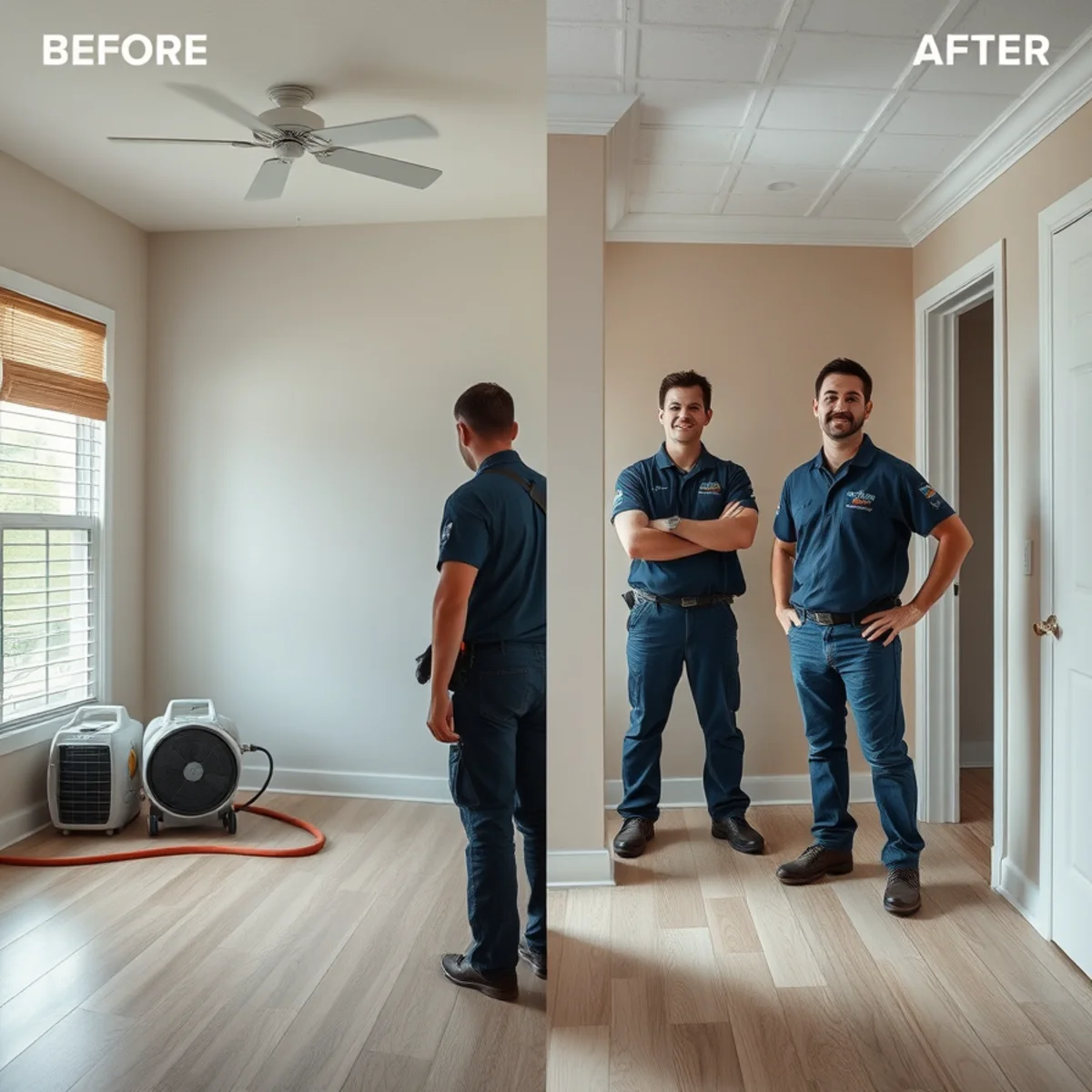
Water mitigation is the emergency phase that limits additional loss through safety controls, source coordination, extraction, contamination control, selective removal, cleaning, and structural drying. Restoration or reconstruction follows verified drying and replaces damaged finishes and assemblies. One company may perform both, but each phase needs its own scope, authorization, records, completion criteria, and payment discussion.
Water mitigation and water restoration are connected but not identical. Mitigation limits ongoing damage: safety, source control, extraction, selective removal, cleaning, and structural drying. Restoration repairs or replaces what the loss and mitigation removed so the space can return to use.
Confusing the phases causes cost and schedule problems. Owners may expect emergency crews to complete finish repairs immediately, or a repair contractor may arrive without final moisture records. A clean handoff explains what happened, what remains, and why reconstruction can begin.
Mitigation controls the active loss
The mitigation team first addresses hazards and water movement. It identifies the water source and category, protects unaffected space, removes standing water, maps moisture, and decides which materials can be dried. Contaminated or failed porous materials may require controlled removal before drying begins.
Equipment is not the whole service. Air movers and dehumidifiers must be sized, placed, monitored, and adjusted. Cleaning occurs in the correct sequence for the water category. Final readings verify that retained materials meet the drying goal or document why an assembly requires additional access.
- Emergency safety and source coordination
- Water extraction and moisture mapping
- Containment, material removal, cleaning, and sanitation
- Dehumidification, air movement, and drying logs
- Final moisture verification and repair recommendations
Restoration rebuilds the finished environment
Once mitigation is complete, reconstruction may replace insulation, drywall, texture, flooring, trim, cabinetry, paint, and other finishes. Larger projects can involve electrical, plumbing, roofing, mechanical, or structural trades. The repair scope should distinguish loss-related work from upgrades the owner chooses.
Matching is part of restoration but not a promise of perfect invisibility. Discontinued tile, engineered wood, cabinet profiles, and aged paint can require broader repair boundaries or documented alternatives. Those decisions belong in the repair estimate before materials are ordered.
Why drying must finish before rebuilding
New finishes can trap moisture inside a wall or floor. That moisture may distort flooring, stain paint, corrode metal, or support odor and microbial growth. Appearance is not enough; retained materials should meet a documented target before insulation and drywall close the assembly.
In Miami, high ambient humidity makes verification especially important. A room may feel comfortable while dense wood, concrete, plaster, or a cabinet base remains wet. The final mitigation report gives the reconstruction team the point at which work can proceed.
The documents that should cross the handoff
The repair estimator should receive the source description, initial photographs, moisture map, removal photographs, final readings, and a list of affected finishes. Without that record, quantities may be guessed or damaged areas overlooked. In a condo, unit and common-area records should remain separated.
Owners should receive both a mitigation invoice and a reconstruction proposal. That makes it easier to compare the emergency work with the permanent repair and to understand what the insurer has reviewed. One company can perform both phases, but the scopes should still be distinct.
Typical schedule and points of delay
Emergency extraction can begin the day of the loss when access is safe. Structural drying often takes several days, while contaminated material removal or large assemblies can extend the phase. Reconstruction timing depends on approval, permits, building rules, material availability, and trade scheduling.
The most avoidable delays come from unclear access, missing owner decisions, undocumented matching issues, and waiting to inspect adjoining units. A designated project contact and a written phase status—mitigating, dry, estimating repairs, approved, or rebuilding—keep the project understandable.
Questions to ask before authorizing either phase
For mitigation, ask how the wet boundary was confirmed, how contamination affects removal, how readings will be documented, and who communicates with the insurer. For restoration, ask which repairs trace to the loss, how matching will be handled, what requires permits or association approval, and who is responsible for owner upgrades.
A promise that one call handles everything is useful only when the same evidence follows the project. The goal is continuity with accountability: one organized team, distinct scopes, and no rebuilding over uncertainty.
Expert insight: what the field evidence should prove
The most important handoff is not a verbal “it is dry.” It is a room-by-room record showing the source was corrected or isolated, contaminated materials were handled, retained assemblies reached documented targets, removal boundaries and quantities are known, specialist testing or clearance is complete where required, and repair substrates are accessible. Reconstruction should then verify dimensions, code and permit needs, condo or landlord approvals, matching limitations, contents access, and owner-selected upgrades before pricing. If repair begins while source work, moisture, contamination, or clearance remains unresolved, new finishes can hide the same condition and make responsibility harder to trace. Keeping mitigation and reconstruction scopes separate also allows an owner to compare each phase without assuming the emergency contractor automatically controls every later repair.
Frequently asked questions
Is water extraction mitigation or restoration?
Extraction is part of mitigation because it stops ongoing water movement and reduces the moisture load. Finish replacement happens during restoration or reconstruction.
Can the same company do both phases?
Yes. One company can improve continuity, but the mitigation and reconstruction scopes, authorizations, documentation, and pricing should remain clear.
How do I know mitigation is complete?
The source is controlled, contamination work is complete, retained materials meet documented drying goals, and the site is ready for an identified repair scope.
Get a measured next step
If water is active or the structure may still be wet, call the 24/7 line. The free inspection connects the source, affected materials, and safe restoration sequence without relying on surface appearance.
Call (201) 277-9344